



Le traitement des eaux usées domestiques, choisir le bon équipement est la clé !
Temps de libération:
2025-01-03 14:25
Domestic sewage treatment is directly related to our daily life and environmental protection, especially in today's increasingly accelerated urbanization process, the selection of domestic sewage treatment equipment has become particularly important. The correct domestic sewage treatment equipment can not only ensure the sewage treatment effect, but also reduce operating costs and improve treatment efficiency. Today, WTEYA will show you how to choose the most suitable domestic sewage treatment equipment.
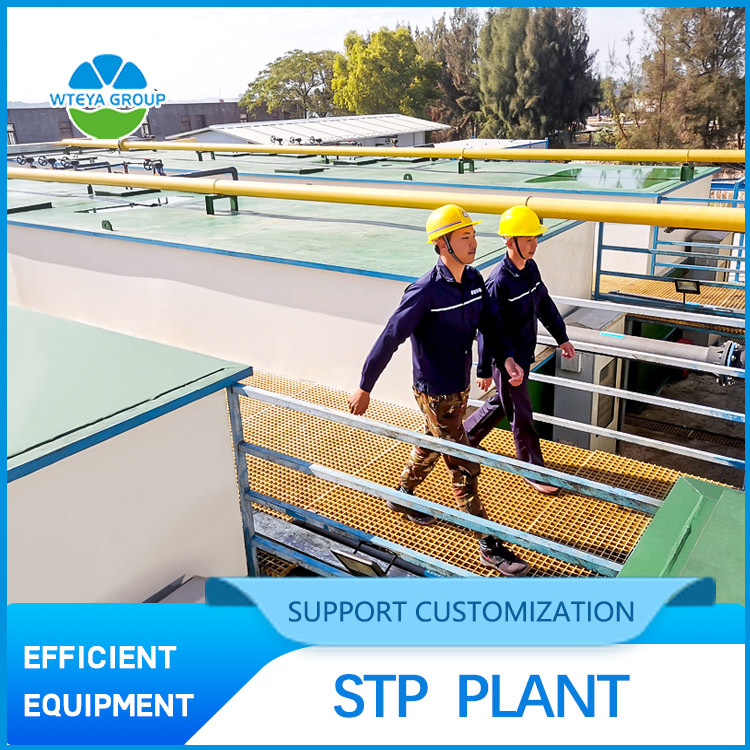
How to choose suitable domestic sewage treatment equipment?
Choosing suitable domestic sewage treatment equipment requires comprehensive consideration of multiple factors. First of all, the initial investment of the equipment is important, but the long-term operation and maintenance costs should not be ignored. When choosing equipment, not only the current economic conditions should be considered, but also the future use needs should be predicted, including population growth, regional development and other factors. In addition, it is crucial to choose equipment with good long-term stability.
1. Balance between investment and operating costs
When choosing domestic sewage treatment equipment, not only the one-time investment should be paid attention to, but also the operation and maintenance costs of the equipment should be considered. The operating cost of the equipment will directly affect the economy of long-term use. Therefore, when choosing, it is necessary to combine the local economic conditions, sewage discharge, population density and future development, etc., to weigh the relationship between initial investment and long-term operating costs.
2. The adaptability of the effluent quality of the equipment to future standards
The effluent quality of domestic sewage treatment equipment must meet the current environmental protection standards. At the same time, considering that environmental protection regulations may be upgraded, the selection of equipment should have a certain degree of flexibility and upgrade space. For example, if the sewage discharge standards are raised in the future, whether the selected equipment can adapt to the new discharge requirements to avoid the need to replace or scrap the equipment because it does not meet the new standards.
3. Choose advanced and reliable technology
With the continuous development of sewage treatment technology, it is becoming more and more important to choose advanced domestic sewage treatment equipment. Traditional equipment may have certain limitations in treatment effect, degree of automation and stability. Therefore, it is necessary to avoid choosing equipment that is about to be eliminated or technologically backward, and give priority to equipment with advanced technical support and guarantee.
4. Efficiency, stability and degree of automation of equipment
Efficient and stable domestic sewage treatment equipment can ensure long-term stable operation and reduce the failure rate. When selecting equipment, be sure to consider the equipment's treatment efficiency, long-term stability and unattended automation functions. Equipment with a high degree of automation can reduce manual intervention, reduce management difficulty, and improve operating efficiency.
5. Selection of domestic sewage treatment equipment in townships
In townships, due to the small amount of sewage discharged and the scattered distribution, it is particularly important to choose suitable domestic sewage treatment equipment. Common township sewage treatment equipment includes traditional septic tanks, biogas fermentation tanks, artificial wetlands, integrated sewage treatment equipment and buried sewage treatment devices, among which integrated "membrane" sewage treatment equipment is the first choice.
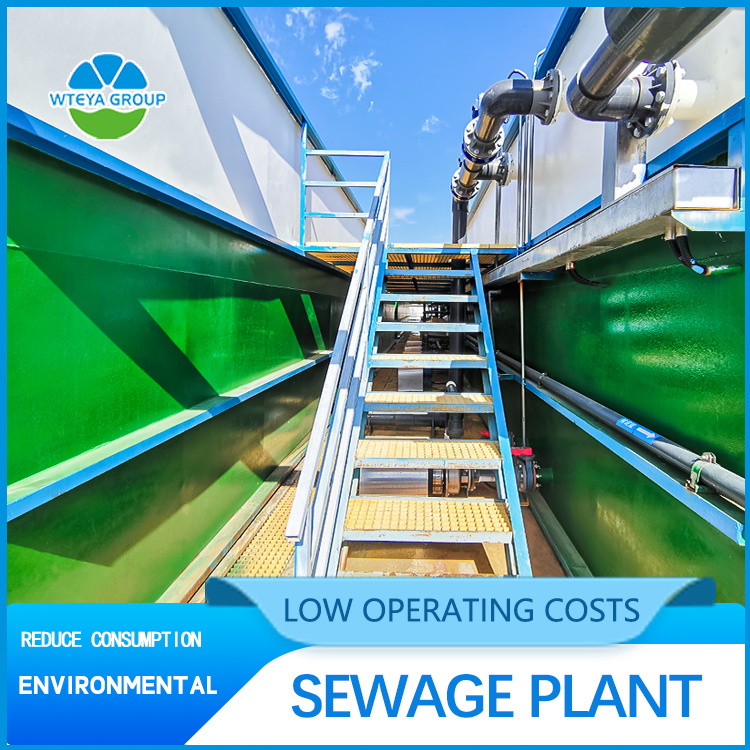
Integrated "membrane" domestic sewage treatment equipment: an ideal choice for township sewage treatment
WTEYA integrated "membrane" domestic sewage treatment equipment has a high degree of automation and stable effluent water quality. It can meet or even exceed the national Class A emission standards. It is an ideal choice for current township domestic sewage treatment. The equipment effectively combines biological treatment and membrane separation technology through membrane bioreactor (MBR) technology, which not only improves the treatment efficiency, but also greatly improves the stability and reliability of the equipment.
1. WTY-MBR membrane bioreactor system
The traditional "membrane bioreactor system WTY-MBR" is the basis of this series of equipment, while the new "intelligent membrane biological sewage treatment system WTY-MBR" is its upgraded version, with a higher level of intelligence and automation, which can more accurately control the sewage treatment process, reduce manual intervention, and ensure that the water quality reaches higher standards.
2. WTEYA's technical innovation guarantee
WTEYA is a leading enterprise in the sewage treatment industry, and is the first to propose and implement the concept of "intelligent membrane biological sewage treatment system WTY-MBR". The company's proprietary "filter membrane online anti-clogging technology WTY-MBR" is an effective guarantee for township domestic sewage treatment, which can improve the stability and operation efficiency of the equipment and reduce maintenance costs.
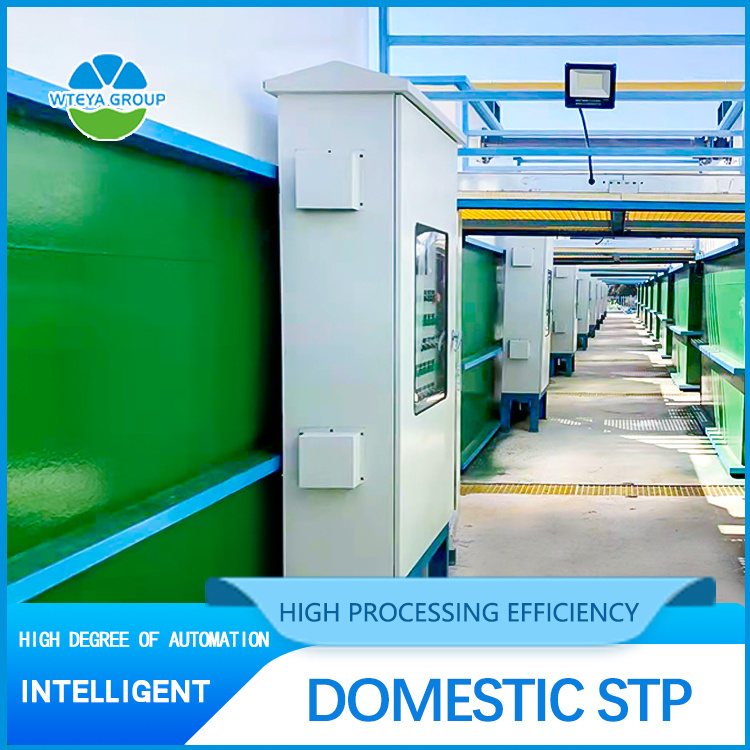
Design advantages of domestic sewage treatment equipment
WTEYA's domestic sewage treatment equipment combines the advantages of traditional and new technologies, and effectively solves common problems in previous equipment with innovative design.
The core advantages of WTEYA sewage equipment design:
1. Enhanced load resistance: The anoxic tank and aerobic tank of the equipment have a long residence time, which can effectively enhance the load resistance and ensure the treatment effect.
2. Efficient biofilm contact exchange: elastic three-dimensional filler is used to provide a larger specific surface area, the biofilm has stronger adhesion ability, and the contact efficiency of the air-water biofilm is high.
3. Uniform aeration system: a uniform aeration system is used in the contact oxidation tank to ensure the growth and treatment efficiency of microorganisms.
4. Energy-saving design: the equipment adopts gravity flow design, which can effectively save energy and reduce investment costs.
5. Compact structure and small footprint: the compact design allows the equipment to be selected above ground or buried underground, which not only saves space, but also uses the upper space for greening or construction of other facilities.
6. Automatic control system: the automatic control system makes the operation and management of the equipment simpler and convenient for supervision and maintenance.
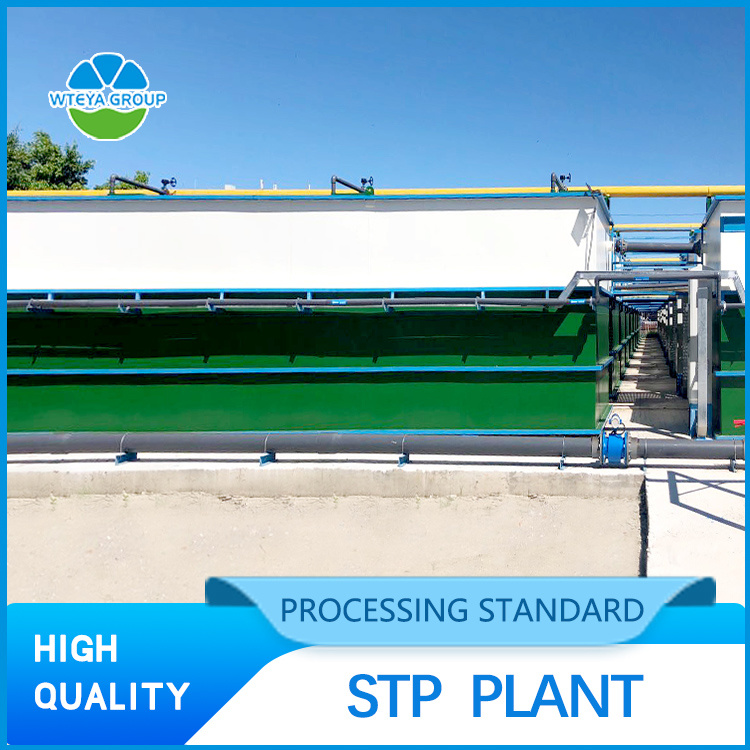
Equipment customization service
WTEYA's domestic sewage treatment equipment can be specially designed and arranged according to the user's on-site needs to meet the treatment requirements of different regions and environments. With the progress of society and the gradual implementation of national environmental protection policies, choosing a suitable domestic sewage treatment equipment has become a top priority to solve the problem of sewage pollution.
When choosing domestic sewage treatment equipment, reasonable equipment selection is crucial. Whether considering initial investment, operating costs, or factors such as treatment efficiency, stability, and automation functions, WTEYA's domestic sewage treatment equipment can meet your needs. Scientific and reasonable equipment selection based on actual conditions can not only effectively solve sewage treatment problems, but also provide solid guarantees for future development. Choose WTEYA and create a cleaner environment together!
Where can I buy domestic sewage treatment equipment?
If you are looking for sewage treatment plants. Then by choosing WTEYA Group, you will get advanced water treatment solutions to help you achieve stable and standard sewage treatment. Whether you need a small sewage treatment plant or a large sewage treatment equipment. Our sewage treatment plants support customization and can meet the needs of different industries. Contact us now at info@wteya.com or WhatsApp: +86-1800 2840 855 to learn more about our STP.
Informations connexes
MVR vs évaporateur à effet unique : comparaison de la consommation d’énergie
MVR vs évaporateur à effet simple : comparaison de la consommation d’énergie L’évaporation est un processus énergivore. Quel que soit l’évaporateur que vous installez, la majeure partie du budget d’exploitation de l’usine sera consacrée à transformer l’eau en vapeur, puis à évacuer cette vapeur.
Récupération d’énergie dans l’évaporation : 5 façons d’économiser la vapeur
Récupération d’énergie lors de l’évaporation : 5 moyens d’économiser la vapeur Dans une installation industrielle d’évaporation, l’énergie thermique représente généralement le principal poste de coûts d’exploitation — souvent 60 à 80 % du coût total, devant l’électricité, la main-d’œuvre et les produits chimiques.
WTEYA expédie 10 unités de dessalement portables SWRO4021 à Porto Rico
Le GROUPE WTEYA a expédié à Porto Rico 10 unités portables de dessalement SWRO4021, conçues pour assurer un approvisionnement en eau rapide sur l’île et en situation d’urgence, tout en présentant une faible consommation énergétique.
Installation d’un évaporateur MVR : combien de temps cela prend‑il réellement ?
Installation d’un évaporateur MVR : combien de temps cela prend‑il réellement ? La plupart des acheteurs planifient soigneusement la date d’expédition, pour s’apercevoir ensuite que c’est l’installation sur site qui marque le véritable démarrage de la production.
Évaporation des eaux usées dangereuses : conception et conformité MVR
Évaporation des eaux usées dangereuses : conception et conformité MVR Les eaux usées dangereuses constituent l’alimentation la plus exigeante qu’un système thermique puisse jamais recevoir. Elles arrivent avec une composition inconnue, un pH extrême, des solvants qui s’évaporent spontanément à basse température, ainsi que des métaux lourds qui ne doivent en aucun cas quitter le site sous forme d’un flux liquide.
Eaux usées de la cathode LFP : conception à zéro rejet par MVR
Les eaux usées issues de la production de cathodes en LFP contiennent 500 à 5 000 mg/L de phosphore total, 1 000 à 10 000 mg/L d’azote ammoniacal et 10 000 à 50 000 mg/L de sulfate.
Guangdong WTEYA Environmental Technology Co., Ltd
Contactez-nous
WhatsApp: +86 1800 2840 855
Téléphone: +86-0769-28636053
+86-0769-28636126
Mail: info@wteya.com
Adresse: 14e étage, bâtiment F4, cyber-cité de Tianan, rue Nancheng, ville de Dongguan, province du Guangdong